
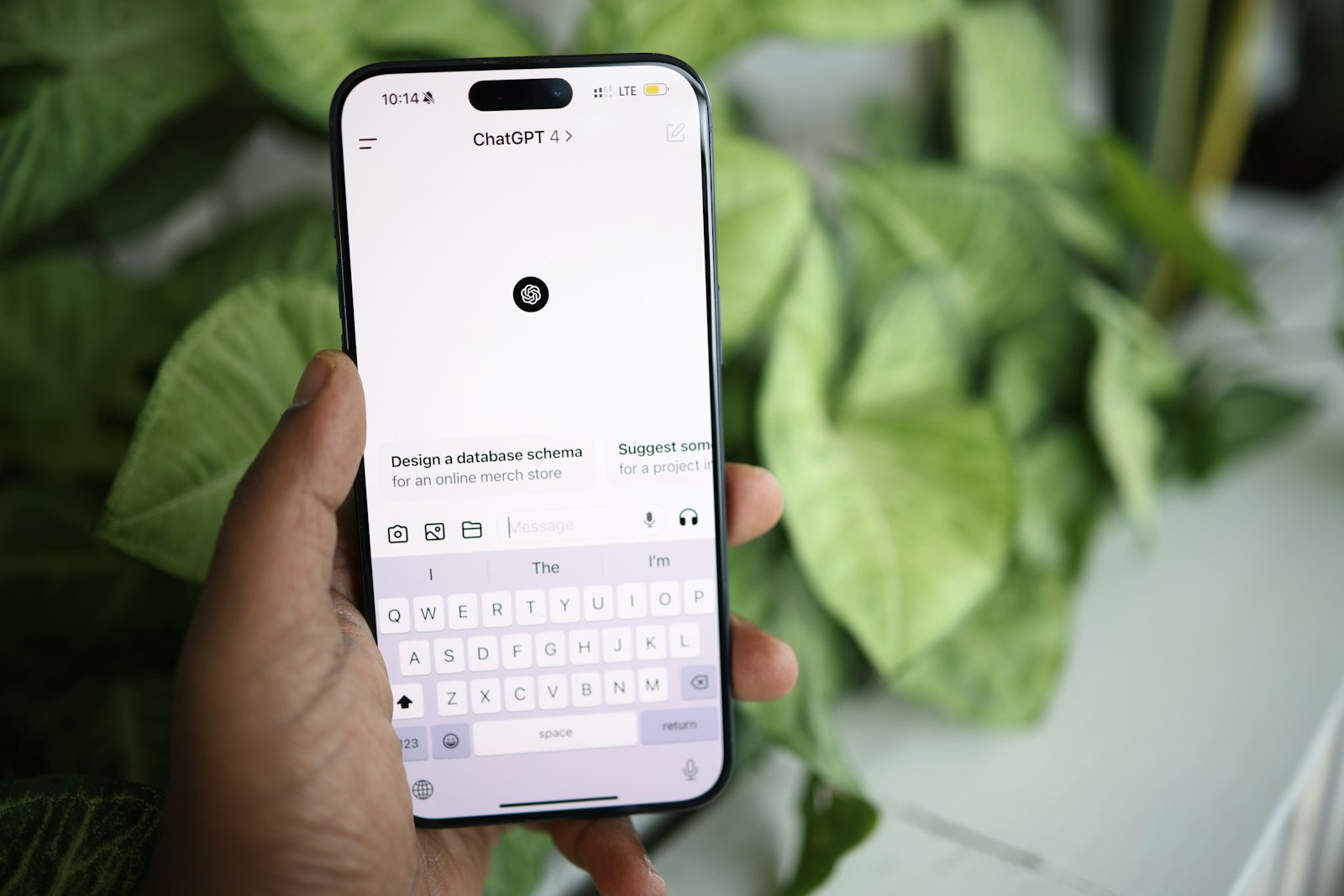
Your customers are asking ChatGPT, Perplexity, and Google’s AI who to hire and what to buy. AI search visits grew 42.8% in a year — from 15.6 billion to 27.4 billion visits. And the visitors AI sends convert: Semrush measured a 4.4x conversion advantage over classic organic traffic, and Ahrefs found 0.5% of traffic from AI search driving 12.1% of signups.
Whether you call the work SEO, AIO, or GEO, the goal is the same: when an AI answers a question in your market, your business is in the answer.
This guide is the exact steps, in order, each backed by published data. No theatre, no secret markup. It is the same playbook we run for our own clients.
First, the honest version
- Google has stated publicly that AI Overviews and AI Mode are powered by its classical search ranking systems. Its guidance says outright: you do not need new machine-readable files or special AI markup to appear in its AI features.
- Independent data agrees. In a controlled Ahrefs study of 1,885 pages that added structured data, AI citations did not improve on any platform.
- What does move citations is unglamorous: being fetchable, ranking well, publishing the formats AI prefers, and being mentioned by sources AI trusts.
There is no AI hack. The work that earns citations is the work that earns rankings — plus a short technical checklist most sites still fail.
Step 1: Let the AI crawlers in
An AI cannot cite a page it cannot fetch. In a 2026 analysis of AI citation factors, URL accessibility scored highest of every factor measured (9.5/10). Yet GPTBot is now the most-blocked crawler on the web — and much of that blocking is accidental.
- Check robots.txt for rules blocking:
GPTBot,OAI-SearchBot,ChatGPT-User(OpenAI);ClaudeBot,Claude-User(Anthropic);PerplexityBot,Perplexity-User. - Check your firewall and CDN. Bot-protection settings (Cloudflare and similar) silently block AI crawlers even when robots.txt allows them.
- Know the Google distinction: AI Overviews and AI Mode use regular Googlebot.
Google-Extendedonly controls Gemini training — blocking it does not protect your search visibility, and allowing it does not improve it. - Verify in your server logs. AI crawlers are now roughly a quarter of verified bot traffic. If you see none of them, something is blocking.
Step 2: Serve real HTML, not a JavaScript app shell
- LLMs read the raw HTML response. Content that only appears after JavaScript runs is invisible to most of them.
- Test it: View Source on your key pages. If your services, prices, and answers are not in that source, AI engines are not reading them.
- Server-rendered pages (WordPress, Shopify, server-rendered Next.js) pass this by default. Single-page apps usually fail it.
A page an AI cannot fetch is a page an AI cannot cite.
Step 3: Win classical search first
- Search rank was the second-strongest citation factor in the same 2026 analysis (9.4/10) — pages in Google’s top 10 have a measurable citation edge.
- AI engines retrieve before they write. Retrieval leans on search indexes — Google’s for AI Overviews, Bing’s for much of ChatGPT.
- Practical order: fix indexing, page speed, titles, internal links, and content quality before spending a dollar on anything labeled “GEO.”
Step 4: Structure pages so answers can be lifted
- Use real questions as headings, answered directly in the first sentence beneath them.
- Lead with facts. Put the key claim in the opening paragraph, not after 400 words of wind-up.
- Use lists and tables. They map cleanly to how AI engines assemble answers.
- Never hide content in closed accordions or tabs. If it renders collapsed in the HTML, some engines read it — and some do not. Flatten it or render it open.
- Write quotable sentences. One idea per sentence. Definitive statements get lifted verbatim.
Step 5: Publish the formats AI actually cites
A 2026 study of AI citations found three formats earn over half of all citations:
- Listicles: 21.9% of citations — they win commercial comparison queries (“best X for Y”).
- Articles: 16.7% — they win informational queries.
- Product and service pages: 13.7% — they win when people are close to buying.
- Match format to the question your customer asks, not to what you feel like writing.
Step 6: Get mentioned where AI looks
This is the step most businesses skip, and the data says it matters more than link-building:
- Branded web mentions correlate with AI visibility at 0.664 versus 0.218 for backlinks — roughly three times more strongly.
- In professional services, 80.9% of cited listicles were third-party, not self-published. AI trusts neutral editors over your own “top 10” page.
- Reddit is the single most-cited domain across major AI engines; LinkedIn rose faster than any other source into 2026.
- Practical moves: industry directories, review platforms, local press, genuine community participation, guest expertise. Earned, not manufactured — Google’s spam systems explicitly discount inauthentic mentions.
- The engines differ, so spread out: only 11% of cited domains overlap between ChatGPT and Perplexity.
Brand mentions correlate with AI visibility three times more strongly than backlinks. The new link-building is being talked about.
Step 7: Keep it fresh
- AI-cited content is measurably younger: about 25% fresher than what ranks in classic Google results.
- Update cornerstone pages on a schedule. Show a visible updated date and keep
dateModifiedaccurate. - Fast-moving categories (software, finance, health, anything with prices) decay fastest.
Step 8: Use structured data for what it’s actually for
- The Ahrefs experiment is clear: adding schema to already-visible pages did not lift AI citations.
- Keep schema anyway — for what it demonstrably does: classical rich results, knowledge panels, product cards, breadcrumbs. Those still feed the rankings AI retrieval depends on (Step 3).
- Anyone selling schema as an “AI visibility” lever is selling against the published evidence.
Step 9: Ship llms.txt — with honest expectations
llms.txtis a proposed standard: a plain-text map of your site for AI systems, served at/llms.txt.- The honest data: Google says it does not use it, and most published files see little crawler pickup so far.
- Why we ship it anyway: it costs almost nothing, developer-facing AI tools and retrieval frameworks do read it, and non-Google ecosystems have shown early support signals. It is cheap future-proofing — never a Google play, and never the headline of an AI strategy.
Step 10: Measure it or you’re guessing
- Track AI referrals in your analytics: traffic from
chatgpt.com,perplexity.ai,gemini.google.com,claude.ai. Small numbers, high intent — across ecommerce, AI referrals convert at 11.4% versus 5.3% for organic. - Ask the engines monthly. Put your real customer questions to ChatGPT, Perplexity, and Google’s AI Mode. Record whether you appear, who does, and which sources get cited — those sources are your Step 6 target list.
- Watch your server logs for AI crawler activity trending up after fixes.
The checklist, compressed
- Unblock AI crawlers (robots.txt + firewall), verify in logs.
- Serve content as real server-rendered HTML.
- Fix classical SEO — it is the retrieval layer.
- Question headings, direct answers, lists, nothing hidden.
- Publish listicles, articles, and strong service pages matched to query intent.
- Earn third-party mentions: directories, reviews, communities, press.
- Refresh cornerstone content on a schedule.
- Keep schema for rich results — expect no AI miracle from it.
- Ship llms.txt as cheap future-proofing.
- Measure: referrals, monthly engine checks, crawler logs.
Common questions
Is GEO actually different from SEO?
Mostly no. Google says its AI features run on classical ranking, and the citation data rewards the same fundamentals. The genuinely new work is Steps 1, 5, 6, and 10 — crawler access, format strategy, mention-building, and AI-specific measurement.
Can we pay to appear in AI answers?
Not meaningfully, today. Citations are earned through retrieval, not bought. Ad formats are emerging inside some AI products, but the organic answer — the recommendation itself — cannot be purchased.
How long does this take?
Technical fixes (Steps 1–2) can show up in engine behavior within weeks because retrieval happens in real time. Authority and mentions (Steps 3 and 6) compound over months. This is a program, not a project.
Do small local businesses have a real shot?
Yes — better than most assume. Citations follow the long tail: on major platforms, no single domain exceeds roughly 5% of citations; the rest spread across thousands of ordinary sites. A well-structured local page answering a specific question beats a thin national one.
What should we do first?
Steps 1 and 2. They are the cheapest, the fastest, and the most commonly failed. Everything else builds on a site AI engines can actually read.
Where to start
Our free audit checks every step above against your site — crawler access, rendering, structure, schema, llms.txt, and what the AI engines currently say about your business. It comes back within 48 business hours. For the deeper practice behind this playbook, see our SEO, AIO & GEO services or read what working with us actually looks like.